
How to Search Livingston County Traffic Court Records
Traffic and civil infraction cases in this county are handled by the 53rd District Court, and the case activity is public. The fastest way to view a register of actions is the statewide MiCOURT Case Search, which shows district, circuit, and probate cases at no cost. A register of actions lists the filings, hearings, and disposition on a case, though document images are not posted online. For paying a ticket, the county runs a separate LivingstonLive payment portal tied to the same court.
Before starting, gather the details from the paper citation. The court file is easiest to find with the citation or case number, but a name search works when the number is missing. Have the driver name, date of birth, and license information ready in case a name lookup returns more than one match.
- Case history: use MiCOURT Case Search for the free register of actions on a 53rd District Court case.
- Ticket payment: use the LivingstonLive District Court Payments portal to look up and pay a citation.
- Certified copies: contact the court counter when a stamped copy of an order or judgment is needed.
Which Court Handles Traffic Cases in Livingston County
Nearly every traffic matter in the county routes through one court. The 53rd District Court hears civil infractions, traffic misdemeanors, and the early steps of any traffic offense charged as a felony. There are no separate justice or municipal traffic courts here, so the district court is the single venue for tickets written anywhere in Livingston County. Its offices sit inside the Judicial Center in Howell.
Serious impaired-driving charges can move to the 44th Circuit Court after a felony bindover, but the ticket and the first hearings still start at the district court. The contact details below cover the office that opens, holds, and closes a traffic case file.
53rd District Court
Judicial Center, Suite 1
204 S. Highlander Way
Howell, MI 48843
Phone: (517) 548-1000
Hours: Monday to Friday, 8:00 a.m. to 5:00 p.m.
Pay a Livingston County Traffic Ticket Online
The county lets you pay most tickets without a trip to the counter. The LivingstonLive District Court Payments portal accepts credit cards, Visa or Mastercard, and you can search for the case by ticket or case number or by name with date of birth. A business entity can be looked up by business name. A convenience fee is added at checkout, and only one case can be paid at a time.
Several cases cannot be paid on the portal. Bond, restitution, and nonpublic cases are blocked online. Restitution and bond can be paid only with cash or a U.S. drawn money order, in person or by mail. The court does not take card payments over the phone. Checks and money orders sent by mail should be made payable to the 53rd District Court. Payments generally post within eight business hours, and a balance may still look unpaid for 24 to 48 hours.
| Search Field | Type | Required | Notes / Format |
|---|---|---|---|
| Case or Ticket Number | Text | Required for a direct lookup | Primary citation or case route |
| First Name | Text | With last name and DOB | Person route |
| Middle Name or Initial | Text | Optional | Person route |
| Last Name | Text | With date of birth | Person route |
| Date of Birth | Date selectors | With name | MM / DD / YYYY |
| Business Name | Text | Alternative | Business or entity route |
| Payment | Process | After search | Convenience fee added |
How to Contest a Livingston County Traffic Ticket
Paying a citation is an admission of responsibility, so a driver who wants to dispute the ticket should not pay it. To contest a civil infraction and schedule an informal hearing, call the 53rd District Court at (517) 548-1000. The ticket must still be recent, issued less than 10 days earlier, when the informal hearing is requested. An informal hearing is held before a judge or magistrate without lawyers, and the officer who wrote the ticket may appear.
The steps below combine the paying and contesting routes so a driver can move from the paper ticket to a resolved case.
- Read the citation to confirm the offense, the 53rd District Court, and any response deadline printed on it.
- Look up the case on MiCOURT Case Search to confirm the charge and status at no cost.
- To pay, open the LivingstonLive payment portal and search by case or ticket number, or by name and date of birth.
- Choose a method: pay online by Visa or Mastercard, pay in person by card, cash, check, or money order, or mail a U.S. check or money order to the court.
- To contest instead of paying, call (517) 548-1000 to set an informal hearing while the ticket is less than 10 days old.
- Keep the receipt, since online payments can take up to eight business hours to post and may not show for a day or two.
Note: paying a Livingston County traffic ticket resolves the court case, but it does not by itself remove the underlying conviction from the state driving record.
What Livingston County Traffic Court Records Show
A traffic case file collects the same kinds of fields a driver sees on the register of actions. It identifies the citation, the charge, the hearing, and the money owed, plus the plea or disposition once the case ends. Points are not stored as a separate court field, but the fine schedule and the offense point to the count the state later applies. The table lists the fields most drivers look for on a Livingston County traffic court record.
| Field | What It Shows |
|---|---|
| Citation or Case Number | The unique ticket or case identifier used for lookup and payment. |
| Charge or Offense | The violation described, such as speeding or a moving infraction. |
| Statute or Ordinance | The Michigan law or local ordinance the ticket cites. |
| Offense Date | The day the citation was issued. |
| Hearing Date | The scheduled informal or formal hearing before the court. |
| Plea or Disposition | The response entered and the outcome of the charge. |
| Fines and Costs | The amount assessed and the balance still due. |
| Payment or Warrant Status | Whether the case is paid, open, or flagged for nonappearance where public. |
The Michigan Secretary of State Driving Record
The court file answers what happened on one ticket, but insurers, employers, and licensing agencies usually want the state driving record instead. That record is kept by the Michigan Secretary of State and pulls in convictions reported by courts, police agencies, other states, and internal state units. It shows license status, retained driving history, and the points tied to convictions. A person can buy it online through MiLogin and Online Services, by mail, or at an office. The self-service stations do not print it.
The Secretary of State must keep driving records for at least 10 years, and some offenses stay longer or permanently. The record request runs on form BDVR-154, which asks who is requesting, whose record is sought, and a permitted purpose under driver privacy law. A lookup costs $15, and a certified record costs $16, and the fee applies even when no record is found.
- Order online, by mail, or in person; buy the Michigan driving record through the Secretary of State.
- The record covers Michigan drivers, unlicensed drivers, and out-of-state drivers convicted of a Michigan traffic offense.
- If a court reported the citation action incorrectly, ask the court for a corrected abstract, then send the order to the Driver Record Activity Unit in Lansing.
Court Traffic Record vs State Driver Record
These are two different files, and mixing them up leads people to look in the wrong place. The court traffic record is the case the 53rd District Court opens on a ticket. The state driver record is the running abstract the Secretary of State keeps on a person. One resolves the ticket, the other proves a driving history to a third party. The comparison lays out who holds each record, what it contains, where to get it, and how to fix an error.
| Aspect | Court Traffic Record | State Driver Record |
|---|---|---|
| Custodian | 53rd District Court, MiCOURT, and the district clerk | Michigan Secretary of State |
| What it shows | Citation, charge, hearing, plea, fines, and payment status | Conviction history, points, license status, and retained driving data |
| Where to access | MiCOURT Case Search and the county payment portal | Online Services, mail, or a Secretary of State office |
| How to correct errors | Contact the court to fix the case entry or abstract | Get a corrected court abstract, then send it to the Driver Record Activity Unit |
Public Access to Livingston County Traffic Records
Traffic case activity is public, but the path to it is not the same as a records request to a county agency. Michigan's Freedom of Information Act excludes the judiciary, so court files do not travel through the county FOIA portal. Instead, the public uses MiCOURT for case history and the court counter for inspection or certified copies. Court Rule 8.119 supports public inspection of case records while limiting online document images, which is why a register of actions appears online but the actual pleading may need a counter visit.
Some categories never open to the public even when a related traffic case is visible. Adoption files are kept in separate locked files and released only by court order for good cause. The statute controlling that access is worth reviewing when a case touches a confidential file.
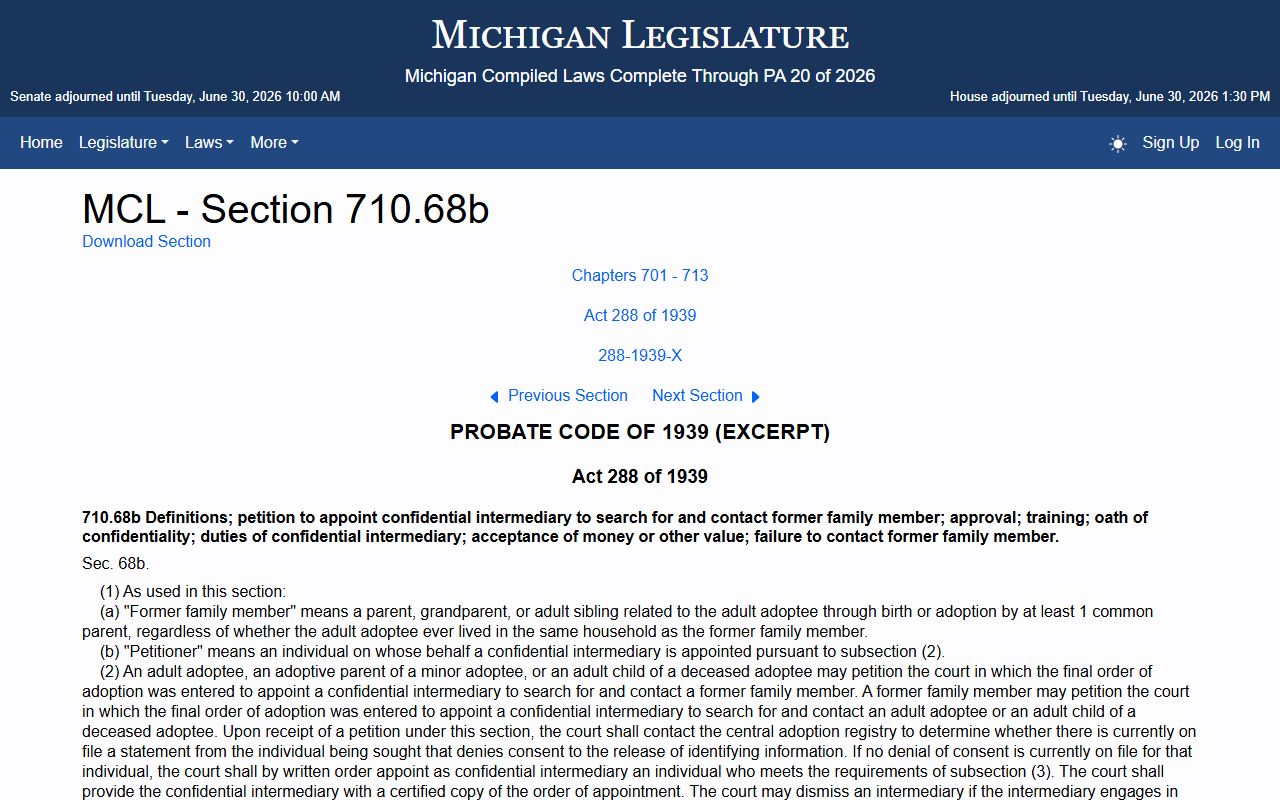
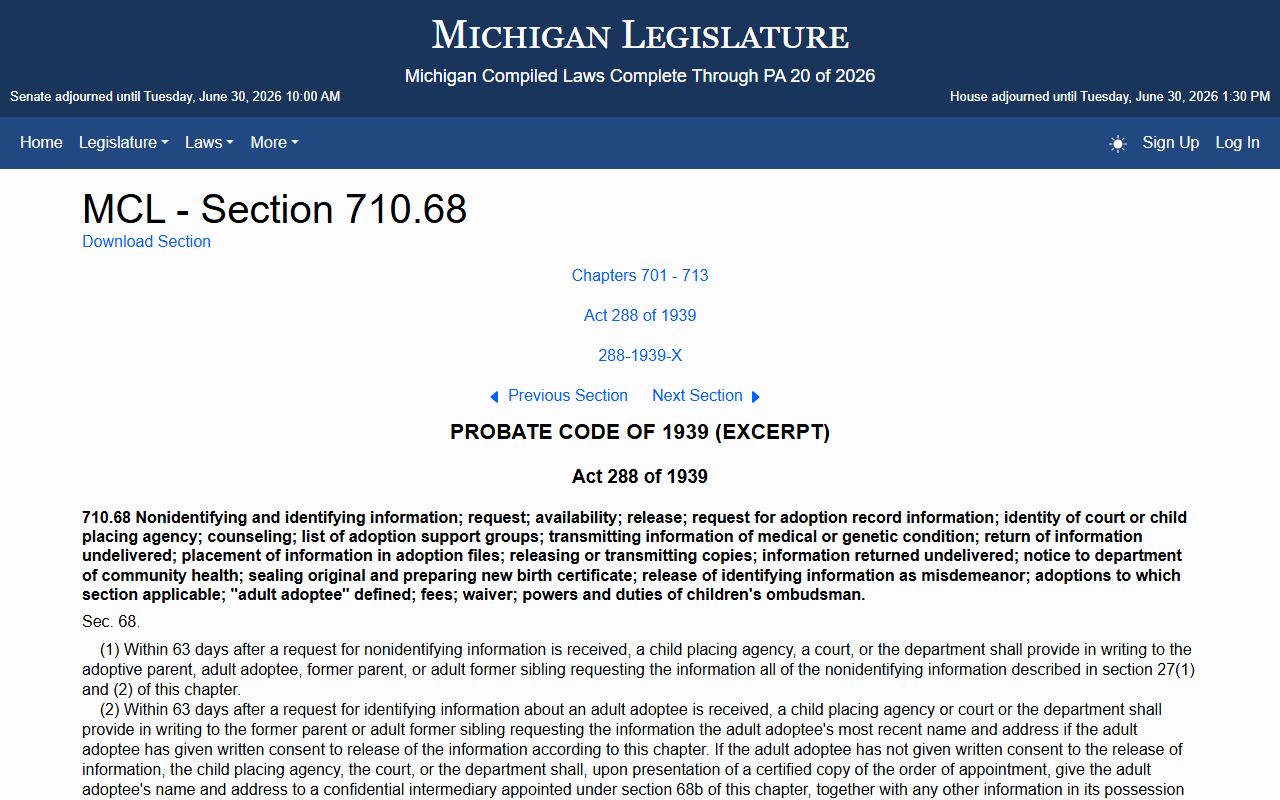
Michigan's adoption access statute sets out who may see those records; the text is posted on the Legislature's page for MCL 710.68b. That confidentiality framework runs alongside traffic files, which is why a public case list still hides sealed and protected material.
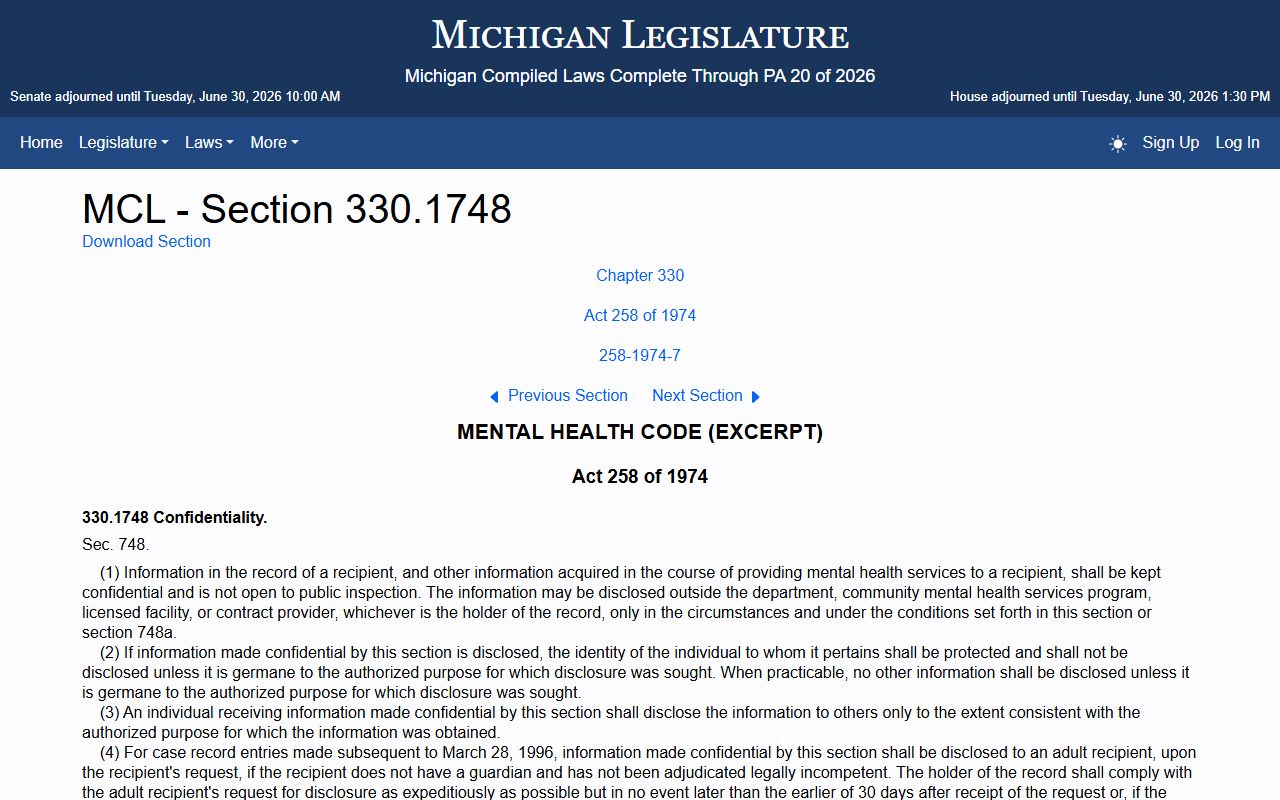
Mental-health proceedings carry their own shield. Recipient records and information gathered while providing mental-health services stay confidential except where the law allows disclosure. The controlling section is published on the Legislature's page for MCL 330.1748. A traffic case tied to a treatment court can therefore show the docket while keeping the health information out of the public view.
Key access rules:
Michigan Court Rule 8.119 governs court-record access and limits online document images.
MCL 15.231 to 15.246 is Michigan's FOIA, which excludes the judiciary, so court files use court channels.
DUI and OWI Cases in Livingston County
Not every driving offense stays in traffic court. Operating while intoxicated, operating while visibly impaired, and similar drunk or drugged driving charges are criminal, not civil infractions. They begin at the 53rd District Court with arraignment and, for a felony level charge, can move to the 44th Circuit Court after bindover. Because these cases carry jail exposure and a criminal record, they follow the criminal process rather than the ticket payment portal.
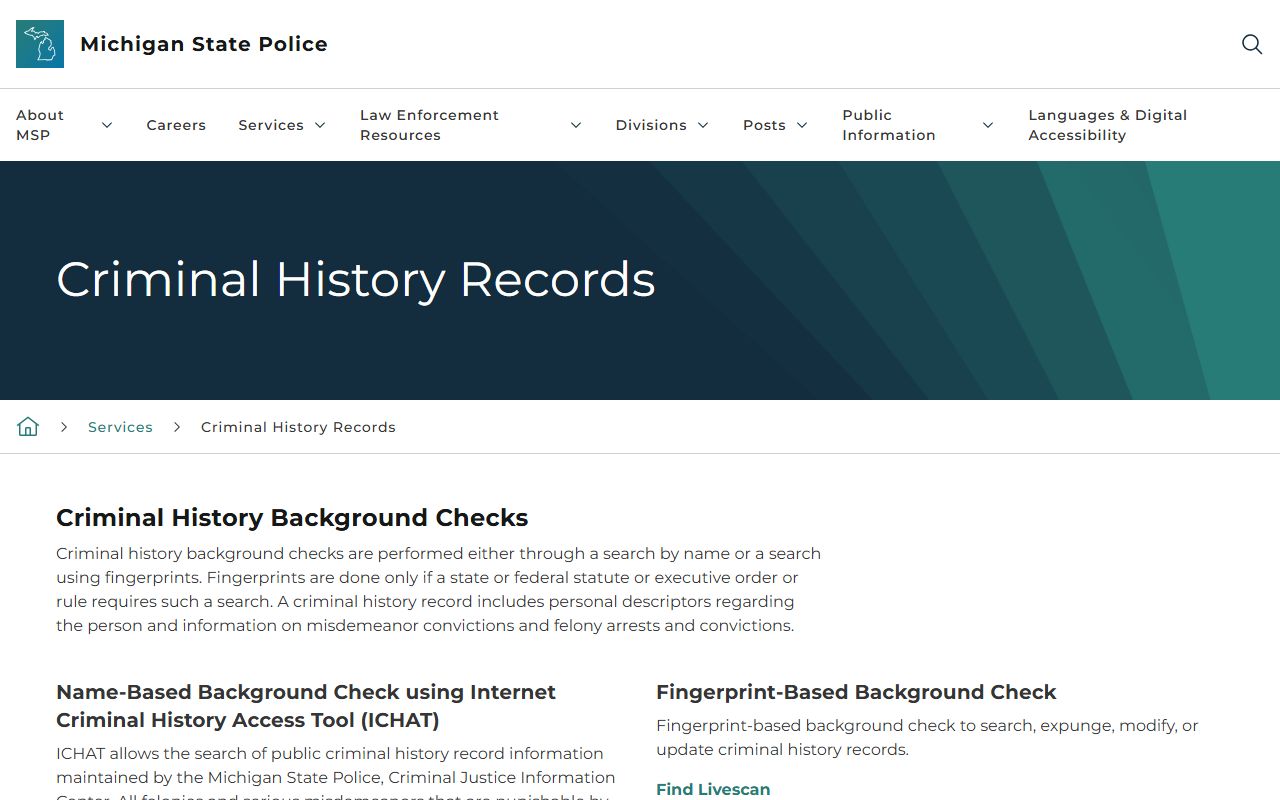
A conviction can also appear in a statewide criminal history rather than a simple traffic abstract. The Michigan State Police maintain that history and explain access on the MSP criminal history record page. Reviewing it helps a driver see how an impaired-driving case reaches beyond the driving record.
For the full charge, plea, and sentencing detail on an impaired-driving case, the Livingston County criminal court records cover the criminal side of the file. That is the record to check when a traffic stop turns into a criminal charge.
Warrants for Missing a Livingston County Court Date
Ignoring a ticket can turn a civil infraction into a bench warrant. When a driver fails to appear or fails to comply, the 53rd District Court can issue a failure-to-appear or bench warrant, and the county publishes an open warrants list drawn from district court cases. The court accepts in-person warrant appearances on felony, misdemeanor, and civil-infraction matters on weekday mornings between 9:00 and 9:30 a.m.
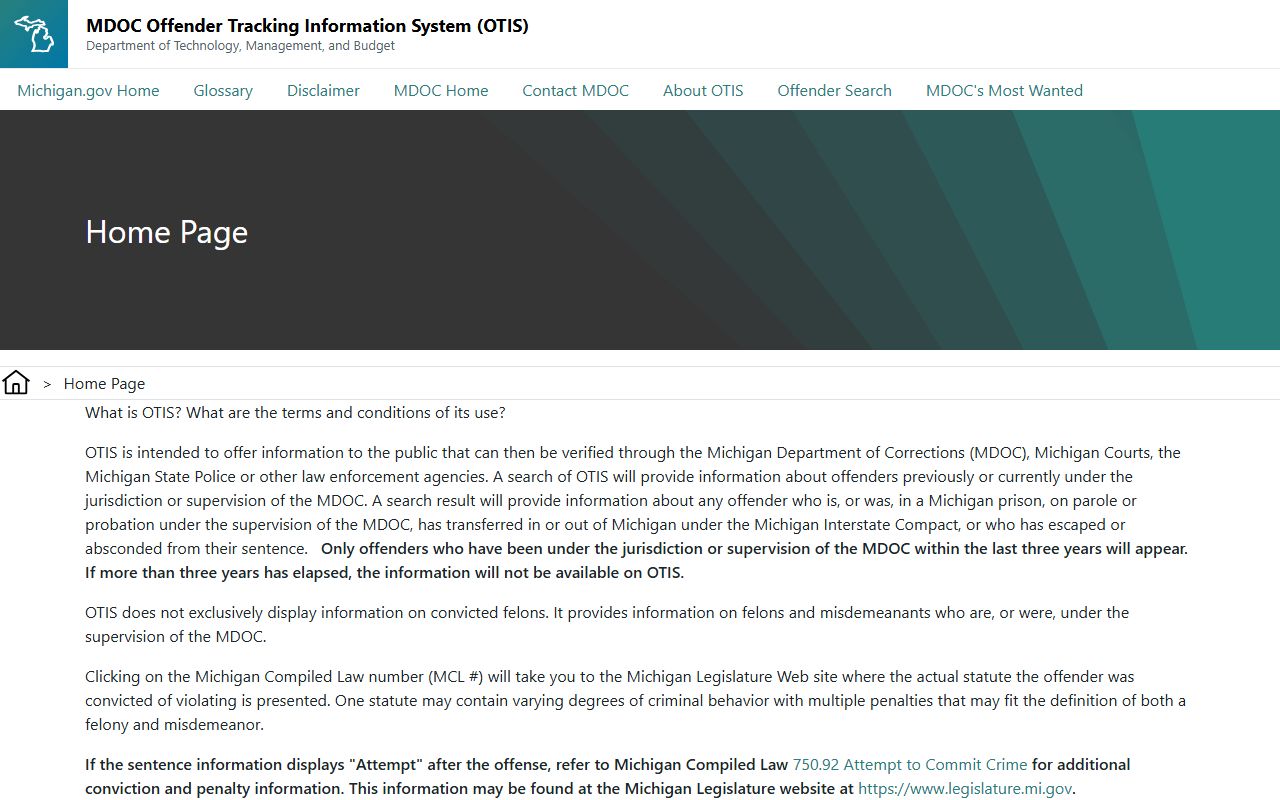
A traffic warrant is a court matter, but a sentenced defendant may also show up in the state corrections system. The Michigan Department of Corrections runs its offender tracking database, the OTIS lookup, for state prisoners, parolees, and probationers. That tool sits outside the traffic file yet can confirm a person's supervision status.
To confirm a warrant tied to a missed traffic date and see the steps to clear it, the Livingston County warrant records explain the published list and the appearance window. Resolving the warrant usually means paying, appearing, or setting a hearing.
Traffic Set-Aside and the Driving Record
Michigan uses the term set aside for what many states call expungement. A set-aside order makes an eligible conviction nonpublic, and adult set-aside rules begin at MCL 780.621. Traffic offenses carry a special limit that surprises many drivers. Setting aside a traffic conviction does not force the Secretary of State to remove it from the driving record, under MCL 780.621c(5). So a court file can go nonpublic while the driving abstract still shows the offense to insurers and licensing agencies.
The set-aside statutes sit within the same nonpublic-records framework that governs adoption and other sealed files. Michigan's adoption access section shows how the law keeps designated records out of public inspection; the text appears on the Legislature's page for MCL 710.68. Reading it alongside the traffic caveat makes the two-file reality clear: a nonpublic court record does not erase the state driving history.
Important: A set-aside order for a traffic offense clears the public court record, but the conviction can remain on the Secretary of State driving record.
Crash Reports and Traffic Copy Fees
A crash report is a third kind of record, separate from both the court file and the driving abstract. The Sheriff's Central Records unit handles those reports, and they can be picked up in office during business hours or purchased for $15 through the Michigan State Police website. Some reports take five to seven days to finish before release. A crash report documents a collision investigation, not a district court traffic case or a state driving record.
Copies from the court file carry their own charges. Plain and certified court copies follow the fee schedule set under Michigan's copy-fee statute, and the state driving record has fixed lookup prices. The table gathers the common costs a Livingston County driver runs into when collecting traffic-related records.
| Item | Amount |
|---|---|
| Plain court copy, per page | $1.50 |
| Certification, per document | $10.00 |
| Michigan crash report (MSP purchase) | $15.00 |
| State driving record lookup (BDVR-154) | $15.00 |
| Certified state driving record | $16.00 |
Court copy fees rest on MCL 600.2546, which sets certification and copy charges unless another law provides otherwise. For a certified traffic judgment or a stamped copy, the 53rd District Court counter is the place to file the request.