
What Probate Covers in Livingston County
The Livingston County Probate Court sits in the Judicial Center on South Highlander Way in Howell. It handles estates of people who have died, trusts, and guardianships and conservatorships for incapacitated adults, minors, and developmentally disabled individuals. The court also decides involuntary hospitalization and treatment for mental illness, unpublicized marriages, delayed registration of foreign birth, and drain appeals. Its work follows the Michigan Mental Health Code and the Estates and Protected Individuals Code.
The court's authority over estates and protected people comes from state law. The Probate Court's jurisdiction is set by MCL 700.1302, which lists the estate, trust, and guardianship matters the court can hear.
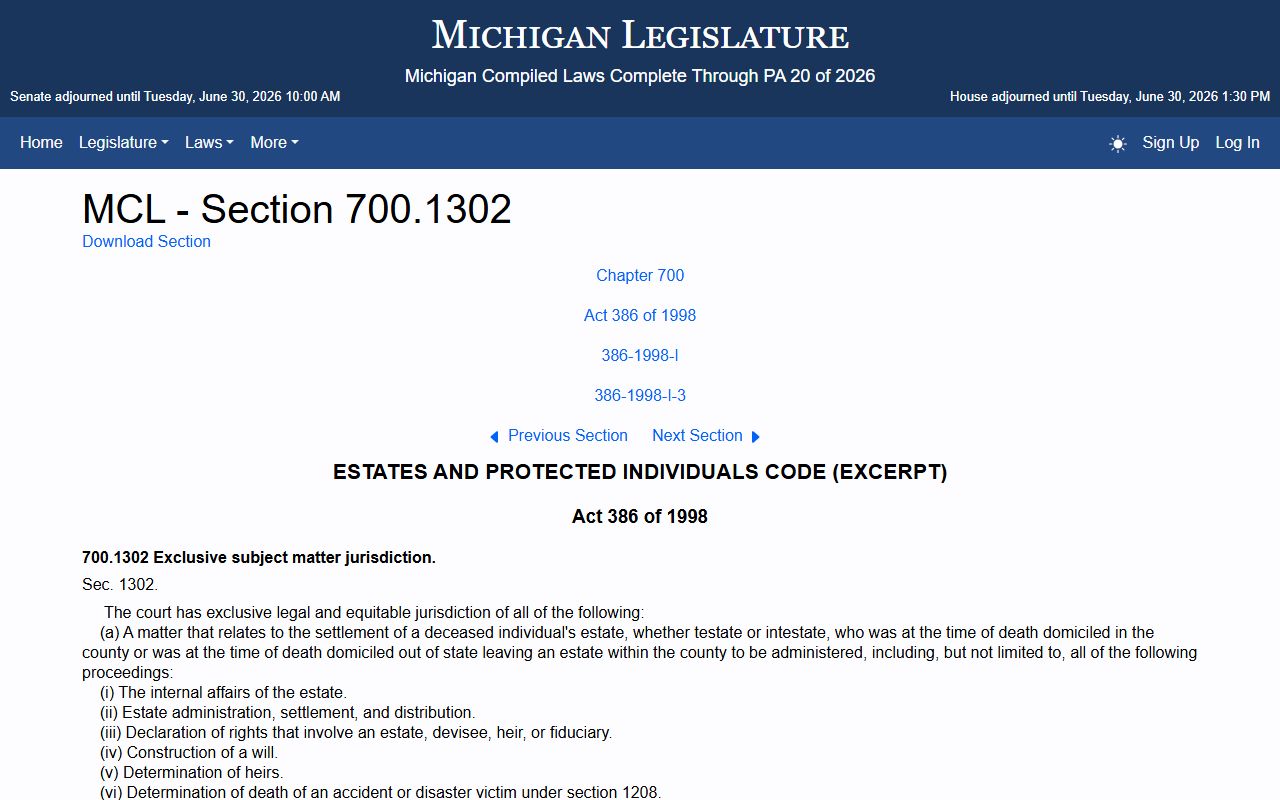
That statute is why estates, wills, and adult guardianships land in probate rather than another courtroom. Divorce, larger civil suits, and felonies belong to the Circuit and District Courts instead.
Probate Terms Defined
Probate paperwork uses a handful of terms that decide who controls an estate and who speaks for a protected person. Knowing them makes a file far easier to read. The list below explains the words that show up most often in a Livingston County probate case.
- Testator
- The person who made a will and whose wishes the estate follows.
- Executor
- The person named in a will, also called a personal representative, who carries out its terms and settles the estate.
- Intestate
- Dying without a valid will, which sends the estate through state distribution rules.
- Guardian
- A person the court appoints to make personal and physical well-being decisions for an incapacitated adult, a developmentally disabled individual, or a minor.
- Conservator
- A person the court appoints to manage and protect the estate and finances of an adult protected individual or a minor.
- Letters of Authority
- The court document that proves a personal representative, guardian, or conservator has legal power to act.
How to Search Livingston County Probate Court
Most probate cases can be found through the state's online case index, and the court fills in the rest by phone or in person. The register of actions is searchable, but full document images are not posted online. Cases opened before 2004 may not appear in the electronic index at all.
- Open the state MiCOURT case search and choose the probate case type, then enter a case number or a participant name.
- For a case filed before 2004, call the Probate Court at (517) 546-3750, since older files may sit outside the online index.
- To view a file or order copies, give the court the file number or case name by phone or at the counter, and pay the copy fee.
The fields available in the online search are outlined below. A known case number gives the cleanest result, while a name search works when the number is unknown.
| Field Label | Type | Required | Options / Format Notes |
|---|---|---|---|
| MiCOURT Case Number | text | Optional | Best for a known probate case |
| First Name / Last Name | text | Optional | Search by participant or party name |
| Case Type Category | dropdown/filter | Optional | Select probate |
| Petition Status | dropdown/filter | Optional | Official MiCOURT filter |
| File Date Range | date range | Optional | Useful for the estate open date |
| Judge | dropdown/filter | Optional | Probate judge or referee where available |
| Phone fallback for pre-2004 | phone | n/a | Call (517) 546-3750 |
Note: The Probate Court asks that you call ahead for closed files or large page counts, because a file may be in storage or copying may take extra time.
Livingston County Estate Records and Small Estates
Probate may be needed when a person dies owning property in their own name or holding a right to receive property. Livingston County groups estates into unsupervised or informal, formal, small estates, and the Affidavit of Decedent's Successor route. Which path fits depends on the size of the estate and whether real property is involved.
Small estates offer a lighter process with no court hearing. For 2026 the small-estate threshold is a value under $53,000, measured by all real and personal property the decedent owned and tied to funeral costs plus the statutory amount. The Affidavit of Decedent's Successor may be available when the estate is under $51,000, there is no real property, and more than 28 days have passed since the date of death.
A small-estate filing has a short document list that the court reviews without a hearing.
- A paid or unpaid funeral bill.
- A death certificate showing Livingston County residence.
- A completed PC 556 form.
- Asset values as of the date of death, with account and security details.
- The $25 filing fee and a $13 certified copy of the order.
Small money claims and landlord disputes are not probate business. Those civil matters sit with the District Court's civil docket, whose limit is set by MCL 600.8301.
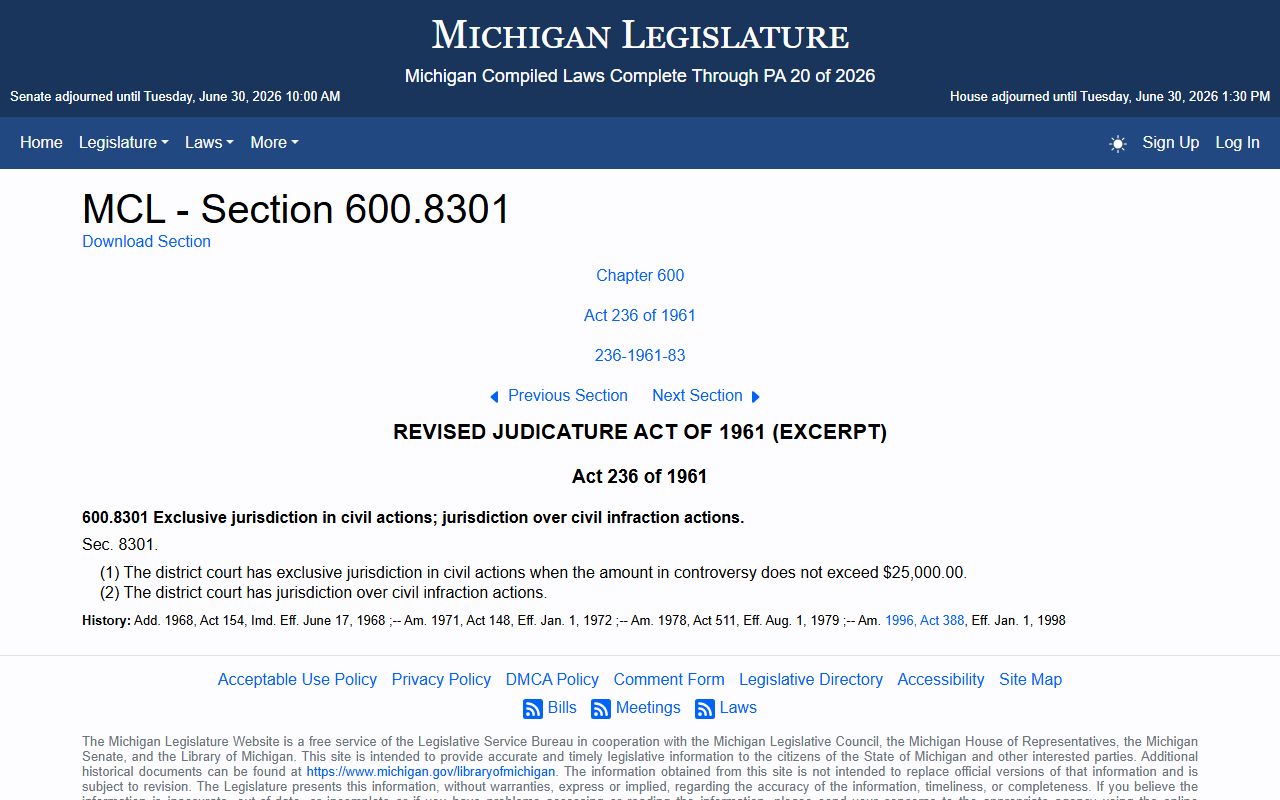
Keeping those tracks separate matters, because filing an estate in the wrong division wastes both time and fees. Estate and guardianship business stays in probate.
Guardianships and Conservatorships
A guardian is appointed to make decisions about the personal and physical well-being of a legally incapacitated adult, a developmentally disabled individual, or a minor. A prospective guardian can be nominated by petition or named in a will. The court treats guardianship and conservatorship as a last option and points families toward less intrusive alternatives first.
Any interested person, or the alleged incapacitated adult, may file the petition, which must state the facts and name a proposed guardian. Court staff cannot suggest a guardian, but they can share a professional guardian list. The filing fee is $175, payable by cash, check, money order, or credit card, with a physician certificate filed when available. A later petition to modify a guardianship, on form PC 675, carries a $20 fee.
Conservators manage and protect the estate of an adult protected individual or a minor. Funds in a minor conservatorship must stay in a restricted account, with annual proof filed for the court.
Livingston County Probate Court Contact
Probate filings, searches, and copy requests all run through one office at the Judicial Center. Beyond the counter, the court accepts documents through a secure drop box, by email, and by fax. Payment for faxed or emailed filings can be made by credit card over the phone.
Livingston County Probate Court
Judicial Center, 204 S. Highlander Way, Suite 2
Howell, MI 48843
(517) 546-3750
Fax (517) 552-2510
Mon-Fri 8:00 a.m.-5:00 p.m.
The secure mailbox outside the Judicial Center is checked throughout the day, and probate documents left there should be sealed in an envelope labeled "Probate Court." Emailed filings go to the address above.
Livingston County Probate Fees
Probate fees split into charges for copies and charges for opening certain cases. The court takes cash, check, credit, or debit at the counter. The most common amounts are listed below.
| Item | Amount |
|---|---|
| Copies, per page | $1.50 |
| Certified copy of letters of authority | $13 |
| Small-estate filing | $25 |
| Certified copy of small-estate order | $13 |
| Guardianship application | $175 |
| Guardianship modification (PC 675) | $20 |
What Livingston County Probate Records Show
An open probate file grows as the estate is settled, and it documents who is in charge and how property moves. Common papers include the will when one exists, the petition that opened the case, and the letters of authority naming the personal representative. Inventories list the estate's assets, and accountings report what was collected, paid, and distributed.
Matters that fall outside probate belong to another court. Divorce and larger civil disputes are heard by the Circuit Court under MCL 600.605, and marriage certificates come from the County Clerk rather than the probate file.
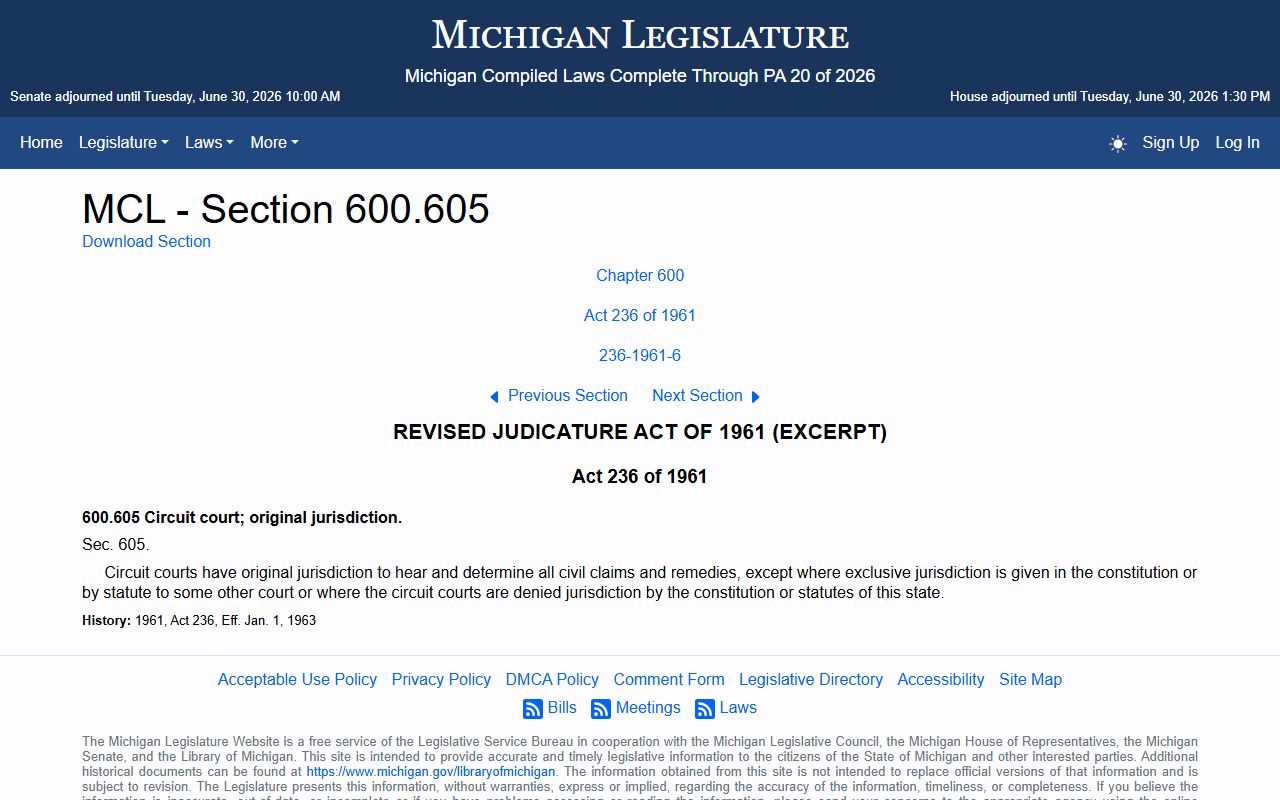
Anyone tracing a family event should match the record to the office that keeps it. Estate and guardianship papers stay in probate, while marriage and divorce records and higher civil files sit with the Clerk and the Circuit Court.
Confidential Livingston County Probate Records
Not every probate paper is open to the public. Guardianship files for minors, mental-health commitment records, and some professional or physician reports carry protections that keep them out of the general record. State law and court rules set those limits.
Mental-health information is protected by the Michigan Mental Health Code at MCL 330.1748, which shields information acquired while providing mental-health services. Access to court records is governed by Michigan Court Rule 8.119, and the Clerk of the Circuit Court can confirm how a sealing order affects a specific file.
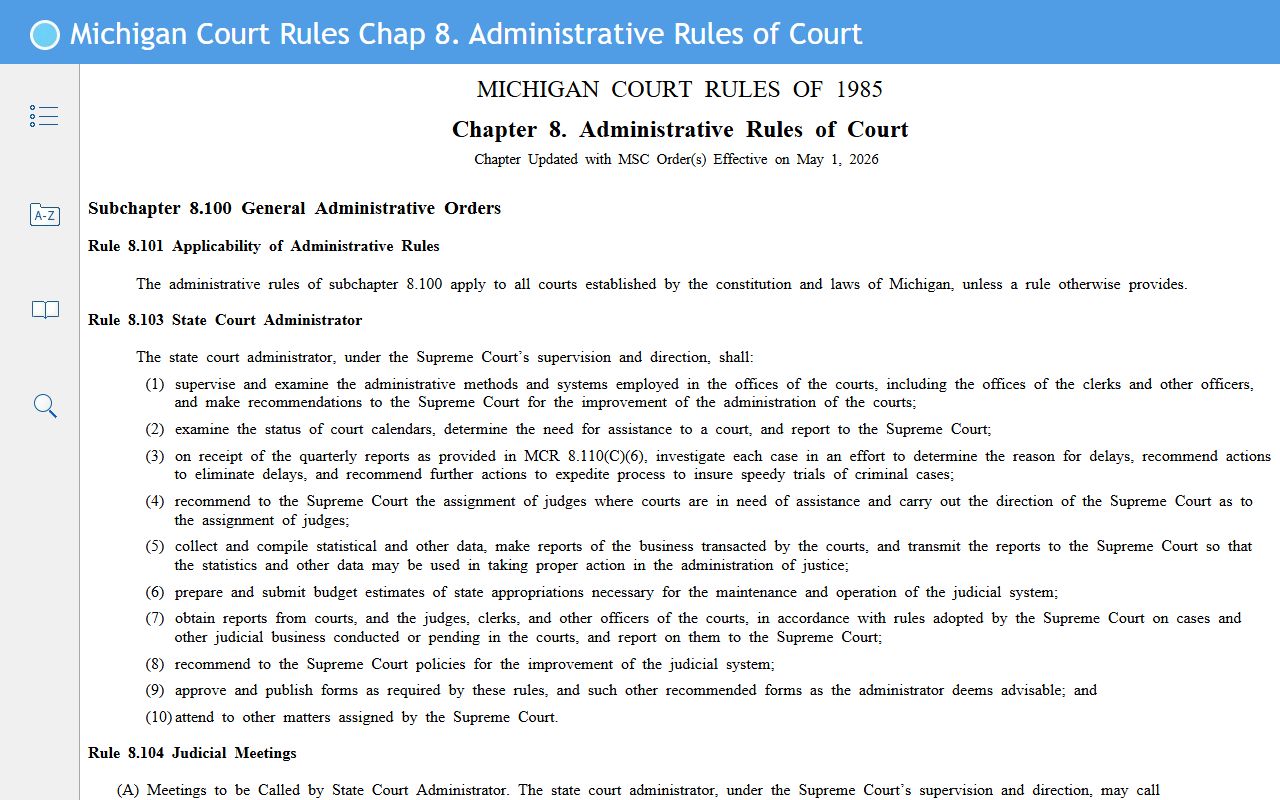
Because access rules vary by matter, the safest step is to ask the court which parts of a file are open before you request copies. The Clerk of the Circuit Court can point you to the office that holds a related civil or family file.